The state of alternative app stores in 2026
Google Play now takes 10% under $1M, so alt stores are no longer a commission play. They're a reach play: devices, featuring and payment rails Play doesn't give you.
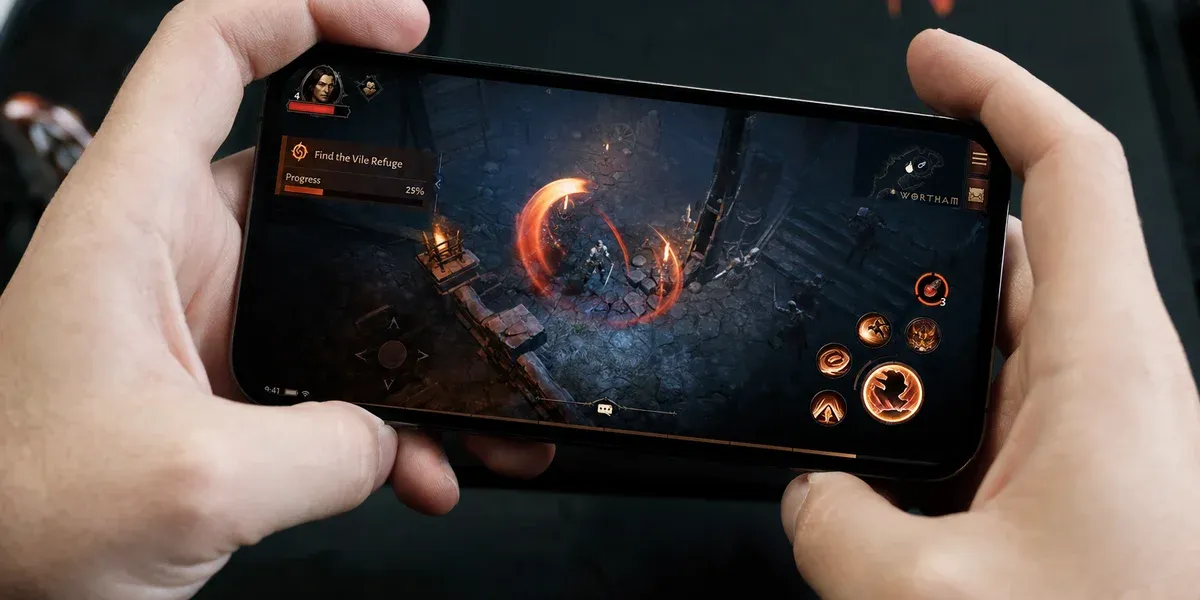
For most of mobile gaming’s history, the answer to “how do I distribute my game” was a binary: Apple App Store or Google Play. That binary is breaking down, slowly in some regions, quickly in others, and the result is a more fragmented but ultimately more interesting distribution landscape.
One thing to get out of the way first, because it changes how you should read everything below. Alternative stores used to be sold as a commission play: 10-20% against 30%. That pitch has expired for a large part of this site’s audience. Since 30 June 2026, Google Play charges 10% on your first $1M of annual earnings in the EEA, UK and US — plus a 5% billing fee when the transaction runs through Google Play Billing, so 10-15% all-in depending on the payment route. At either end of that band Play is cheaper than the App Store and at least competitive with every published alt-store rate on this page. For a studio under that threshold in those regions, Play is now among the cheapest storefronts you can be on. That’s genuinely good news for indies and worth saying plainly.
The case for alternative distribution survives that repricing intact, because it was never really about the rate card. It’s about reach Play doesn’t give you, installs that carry no auction price, payment rails that convert players cards can’t, and not running an entire business through a single account. This is the snapshot we’d give you over a coffee.
What forced the door open
Three independent pressures converged between 2024 and 2026, and they’re still compounding.
Regulatory pressure. The European Union’s Digital Markets Act became binding on designated gatekeepers in March 2024 and forced Apple to allow third-party marketplaces and sideloading inside the EU. The UK’s Competition and Markets Authority has issued similar designations for Apple and Google’s mobile ecosystems. Japan’s Mobile Software Competition Act took effect at the end of 2025, and several US state-level cases (most notably the Epic v. Google remedies) have pushed Google to widen its real-money payment and third-party billing options on Android worldwide. None of these regimes is identical, but the trajectory is the same: regulators no longer accept that two gatekeepers should hold all the keys.
OEM strategic shift. Samsung, Xiaomi, OPPO, Vivo and Huawei have all leaned harder into their own storefront layers as a revenue lever rather than a cosmetic differentiator. Samsung Galaxy Store, Xiaomi GetApps, OPPO App Market, Vivo V-Appstore and Huawei AppGallery now ship preinstalled on the vast majority of Android devices sold outside North America. Huawei’s case is the sharpest illustration of what this means: recent Huawei hardware ships without Google Mobile Services, so AppGallery is the only route onto those devices. Preload slots, editorial placement, and access to the OEM’s own audience data are what make these channels attractive to publishers with the bandwidth to integrate. The revenue-share terms are a bonus on top, and they matter more above the $1M Play threshold than below it.
Web-native distribution. Modern browsers are now genuinely capable of hosting playable content at scale, which means that for some titles “distribution” no longer requires an app at all. We cover this in depth in our piece on web-native games, but the short version is: another distribution surface has appeared, and it’s not gated by the duopoly. A specific slice of that surface — HTML5 titles running with zero install friction inside Telegram, TikTok, and Messenger — has become a channel in its own right, though published market sizings for it vary too widely to quote with any confidence; we broke out the instant-games layer playbook separately.
The map: where the volume actually is
“Alternative” isn’t synonymous with “small”. The 2026 map of meaningful non-duopoly distribution roughly looks like this.
Europe: DMA-driven marketplaces
In the EU, the marketplaces that matter today are AltStore PAL (the first DMA-licensed iOS marketplace), Epic Games Store on iOS (launched across the EU in August 2024), Aptoide (long-standing on Android, now also on iOS in the EU), Setapp Mobile (Apple-focused, subscription model), and several specialised stores including Mobivention’s Pocket Edition and itch.io for indie-focused distribution. Volume is uneven: Epic Games Store and Aptoide are doing real numbers in countries with strong indie audiences (Germany, France, the Nordics, Poland), while several niche stores are still finding their identity. A newer sub-category is worth watching: games-only curated marketplaces like Skich and Onside, which bet that a focused catalogue beats a general-purpose store for discovery — we break down what Skich and Onside mean for publishers separately, and if Onside is the one you’re evaluating, our guide to listing on Onside in the EU and Japan walks through eligibility, submission and the fee stack. Epic’s mobile store is also about to open to general submission — we cover how to list before Epic’s mobile self-publishing opens separately. Aptoide’s iOS marketplace is worth a closer look on the money side, too: it’s the first store there to ship Apple-approved native in-app purchase, and its published iOS split is a flat 80/20 in the developer’s favour — see our guide to Aptoide’s iOS IAP model for what that means for EU publishers.
The iOS marketplace path in the EU carries one extra cost to model, and it’s smaller than its reputation. Apple’s Core Technology Fee applies at €0.50 per first annual install only above one million EU installs a year, and Apple estimates that less than 1% of developers pay it at all. We ran the arithmetic for the studios who do cross that line in what the CTF actually costs a game studio in the EU.
Asia: OEM-led storefronts and carrier billing
Outside Mainland China (where Google Play has never operated and a constellation of OEM and third-party stores has always carried the load), the volume centre of alternative distribution is fragmented across:
- Samsung Galaxy Store in Brazil, Indonesia, Vietnam, and parts of Eastern Europe, where Galaxy device share is exceptionally high.
- Xiaomi GetApps in India, Indonesia, Russia, and Latin America.
- Huawei AppGallery in MENA, parts of Eastern Europe, and remaining Huawei-installed-base markets.
- Telecom carrier billing integrated into these OEM stores in markets where credit card penetration is low (Indonesia, Philippines, Thailand, Egypt, Nigeria, Bangladesh). Carrier billing is often the single most impactful conversion lever in these markets — we map where it pays off region by region in our 2026 carrier billing reach map.
Long-tail Android markets
Beyond the OEMs, regional and specialised stores still matter for the right title. APKPure, Uptodown, and Amazon Appstore (especially on Amazon Fire devices) all transact non-trivial volume in specific niches. Niche curators like itch.io and GOG Mobile address audiences that are unreachable through Play Store search alone.
What the binary costs you in 2026
If you operate as if iOS App Store plus Google Play is the full picture, four things hurt you. Only the last one is about money changing hands per transaction.
You can’t reach a large share of Android buyers at all. The OEM storefronts are preinstalled on the vast majority of Android devices sold outside North America, and Huawei AppGallery is the only way onto recent Huawei hardware, which ships without Google Mobile Services. These are players Google Play does not deliver to you at any price. That argument doesn’t weaken when Play changes its rate card, because it was never a pricing argument.
You’re buying every install at auction. A featuring slot, a preload placement, or an editorial rotation on an OEM store brings volume with no CPI attached. That is the real economic lever, and most studios under-weight it because it shows up as reach rather than as a line in the P&L. With blended gaming CPI up 30% year-on-year in 2025, to $0.56 globally on Adjust’s numbers, an install you didn’t bid for is worth considerably more than a few points off a commission. We make that case in full in the argument for distribution beyond paid UA.
You’re leaving payers on the table. Carrier billing, integrated into most OEM stores in low-card-penetration markets, converts people the card rails simply lose. In Indonesia, the Philippines, Egypt, Nigeria or Bangladesh, that isn’t a discount on revenue you already had. It’s revenue that didn’t exist for you before. We map where it pays off in the 2026 carrier billing reach map.
You’re running the whole business through one account. A suspension, a ranking-algorithm change, or a CPI spike on a single channel puts the business at risk with no fallback. Studios operating two or three channels treat that as insurance, and it’s cheap insurance measured against the alternative. The same logic covers regulatory turns: publishers who already understand alt-store mechanics will be a quarter ahead when the next jurisdiction opens.
Where commission still moves the needle
Commission is still a factor and no longer the factor. Since 30 June 2026, Google Play charges 10% on the first $1M of annual earnings in the EEA, UK and US, plus a 5% billing fee on transactions that run through Google Play Billing. Above that threshold the standard rates take over: 20% on new installs and 25% on existing ones, or 15% and 20% respectively for developers in the Games Level Up programme. Under $1M in those three regions, Play is at least as cheap as every published alt-store rate on this page, and pretending otherwise would cost us your trust.
It still counts in three places: above the $1M threshold, everywhere the Play rollout hasn’t reached yet (the rest of the world is scheduled for 30 September 2027), and on iOS, where the App Store remains at 30%/15%. Outside those, choose your alternative channels for the reach and the un-auctioned installs, and treat the rate card as a tiebreaker. Run your own numbers against Play’s post-June-2026 rates before assuming commission is where your saving is.
The economics: reach, audience quality, CPI
The honest unit economics on alternative channels are messier than headline numbers suggest. Four observations from publishers who’ve made the move.
Un-auctioned installs are the lever that compounds. A preload slot or a featuring placement delivers volume at a cost you negotiated once, rather than one you re-bid every day. Over a year that gap widens as auction prices climb, which is the opposite of how a commission advantage behaves. Commission is fixed at whatever the rate card says; acquisition cost is not.
Audience quality decides whether the reach is worth having. Samsung Galaxy Store users in Brazil, Huawei AppGallery users in MENA and Aptoide users in the EU are not the people you reach through Play featuring, and they don’t behave like them either. Payer rates, retention and ARPDAU on an alt-store cohort can be markedly better or markedly worse than your Play benchmark for the same game. The only way to know which one you’re getting is to ship and measure across a full retention window.
CPI on alt stores is rarely an apples-to-apples comparison. A “low CPI” on an OEM store may reflect lower ad supply but also less competitive ad inventory. Net-net it’s still usually cheaper than Play UA, but you have to model lifetime value alongside the install cost — not in isolation.
Operational drag is the cost most often missed. Each new channel implies its own build configuration, SDK choices, submission cadence, payment flow and partner reporting. Done well, that drag is a one-time investment with compounding returns. Done poorly, it ends up as a permanent tax.
For the underlying mechanics — billing integrations, payout flows, regional VAT and withholding — see our distribution practice overview.
Operational reality: what a multi-store build actually costs
The publishers we work with split the operational cost into three layers, each with its own characteristic gotcha.
Build adaptation. SDK constellations vary by store. Galaxy Store requires Samsung In-App Purchase SDK. AppGallery requires HMS Core in markets where Google Mobile Services is unavailable. Carrier billing requires DCB SDKs that vary per carrier per market. The remedy is to commit to a small number of stores and treat each as a real product, not a side experiment. Half-shipped is worse than never shipped — a half-integrated store that ships broken hurts your brand and your relationship with the partner.
Submission and onboarding. Each OEM and alt-store has its own QA bars, content guidelines, and review cadence. Some are faster than Apple’s review; some are slower. Surprises here come almost entirely from regional sensitivities you can predict in advance (gambling mechanics in Indonesia, certain ratings in the Gulf, age-gate strictness in Germany) if you spend an afternoon mapping them before submission.
Ongoing operations. Updates, payments reconciliation, ad-network compatibility, live-ops calendars, partner reporting cadence. This is where the difference between a side experiment and a real channel shows. The studios that get this right tend to designate one operator per channel rather than treating it as a shared back-office task.
If you’re a small team and operational bandwidth is the constraint, we cover how we help studios offload this in our founding developer programme.
Distribution services vs going it alone
The three operational layers above have a natural corollary question: at what point does it make sense to build in-house multi-channel capacity versus working with a distribution service?
The distinction matters because “distribution services” and “alternative app stores” are not the same thing. A distribution service — the B2B layer of the alt-store stack — handles the integrations, SDK constellations, partner relationships, submission cadences, and ongoing operations across multiple channels on a publisher’s behalf. The publisher picks the channels and owns the relationships; the service does the integration and operational work. A studio can sign directly with Samsung Galaxy Store, Aptoide, and a carrier billing provider; it can equally work with a distribution partner who manages those relationships across the full stack. On the OEM side, KYLN’s aggregator platform is a purpose-built example — bundling Huawei, Samsung and Xiaomi into a single integration paired with OEM user acquisition.
The DIY vs. service calculus is roughly:
- Studios targeting 2-3 channels with a dedicated platform team can generally manage internally, given the right playbooks and existing expertise.
- Studios targeting 5+ channels across OEM storefronts, EU marketplaces, carrier billing, and web-native simultaneously almost always find the per-channel overhead — SDK maintenance, submission cadence, payment reconciliation, reporting — makes a service relationship economical.
- Studios launching a new channel category (e.g., first OEM integration, first carrier billing deal) often benefit from a service relationship even at small channel count: the upfront knowledge transfer is worth more than the ongoing fee.
The operational drag described above — build adaptation, submission, ongoing ops — is exactly what distribution services are built to absorb. The relevant question isn’t whether that drag exists; it’s who carries it most efficiently. For studios whose core competitive advantage is game development rather than distribution operations, outsourcing the latter to a specialist is often the right call.
If you’re evaluating whether a distribution service fits your situation, our distribution practice walks through how we structure this for studios at different stages.
A pragmatic 2026 playbook
For publishers asking “what do we actually do about this?”, a 2026-shaped answer looks like this (and if you want the full stack-and-sequence version, we lay it out in our multi-channel distribution framework):
- Pick two or three channels that align with your audience and your monetisation model. Don’t try to be everywhere. The cost-of-bad-fit on alt stores is higher than on the dominant stores because there’s no organic discovery floor to catch you.
- Treat each channel as a real product, not a side experiment. Each one gets its own build branch, its own QA pass, its own launch.
- Pre-negotiate the operational stack before signing partner deals: ad SDKs, payment flows, analytics, ratings APIs, build pipelines. The thing that derails alt-store launches isn’t usually the partner relationship, it’s the SDK constellation discovered three weeks before launch. On iOS specifically, our third-party iOS marketplace checklist lays out the entitlements-to-token sequence.
- Measure differently than you do on Play. Alt-store cohorts behave differently; comparing day-one ARPDAU to your Play benchmark without context is misleading at best.
- Plan for the regulatory next move. What Apple has to do in the EU today, it may have to do in the UK and Japan next year, and in parts of the US the year after. Mechanical readiness compounds across regulatory turns.
Indie publishers in particular often underrate one specific channel that fits their economics surprisingly well — see our piece on OEM partnerships for indies.
What’s next
Three things to watch through the rest of 2026 and into 2027.
Apple’s iOS posture outside the EU. If Apple opens sideloading or third-party marketplaces in the UK or Japan, the alt-store map redraws overnight. Publishers should treat their EU integrations as templates for what comes next.
The Korea/India/Indonesia regulatory layer. South Korea’s Telecommunications Business Act amendment, India’s competition cases against Google, and Indonesia’s ongoing platform regulation work all point to further fragmentation. None of these will look like the EU’s DMA, but the directional pressure is the same.
The web-native cross-over. Web-native and alt-store distribution are starting to overlap (some OEM stores now feature web-installable titles, several EU marketplaces are flirting with PWA-style installs). The boundary between “store” and “browser” matters less every quarter.
FAQ
Are alternative app stores actually worth it for a small studio in 2026?
Yes, but for reach rather than for the commission. Since 30 June 2026 Google Play charges 10% on your first $1M of annual earnings in the EEA, UK and US, plus a 5% billing fee on transactions that run through Google Play Billing, so a small studio in those regions will not save money on the rate card by moving to an alt store. What alt stores still give you is access to devices Play doesn’t reach, featuring and preload volume that carries no CPI, carrier billing in markets where cards fail, and a second channel if the first one goes down. The honest answer on scope is still “two channels, picked carefully”, matched to a user base where your title has clear audience-market fit.
Do alternative app stores still make sense now that Google Play charges 10%?
They make a different kind of sense. Play’s June 2026 repricing removed the commission argument for studios under $1M in the EEA, UK and US, and that’s a good outcome for indies. It left the other arguments untouched: OEM stores are preinstalled on most Android devices sold outside North America, Huawei AppGallery is the only route onto recent Huawei hardware, editorial and preload placements deliver installs with no auction price, and carrier billing converts payers the card rails lose. Commission still matters above $1M, in regions the Play rollout hasn’t reached (the rest of the world is scheduled for 30 September 2027), and on iOS, where the App Store remains at 30%/15%.
Which alternative app store has the most volume in the EU?
As of mid-2026, Aptoide and the Epic Games Store on iOS are the two highest-volume DMA-licensed marketplaces, with AltStore PAL holding a strong indie niche. Volume varies significantly by country: Germany and France are stronger for Aptoide, the Nordics tilt to Epic, and AltStore over-indexes in countries with deep indie audiences.
Do I need a different build for each alt-store?
Usually yes, but the delta is smaller than people fear. The SDK substitutions (Samsung IAP, HMS Core, AppGallery Connect, etc.) account for most of the work. The build pipeline can usually be templated once and then maintained as configuration. The harder problem is usually QA coverage, not engineering.
What revenue share should I expect on alternative app stores?
Published rates run from 10% to 20%, through to net-revenue arrangements on OEM preload deals. Aptoide charges a flat 20% on iOS; on Android its split depends on where the install came from — 25% shared with the distribution channel, or 10% on direct-to-consumer installs. Samsung does not publish a headline percentage, so treat any figure you see quoted for Galaxy Store as a starting point for negotiation rather than a rate card. Negotiated rates for established publishers are often lower than the public rate card. Set that band against the right benchmark: it beats the App Store’s 30%, and it sits alongside Google Play’s 10% plus 5% billing fee on your first $1M in the EEA, UK and US. The economics that justify these channels are UA cost reduction and payment reach, with commission as one input among several.
Is carrier billing on OEM stores worth integrating?
In markets where credit card penetration is low (Indonesia, Philippines, Egypt, Nigeria, Bangladesh, parts of LATAM), carrier billing is frequently the single highest-impact conversion lever and routinely pays for the integration work several times over. In high-card-penetration markets it’s marginal.
How does the DMA actually affect publishers outside the EU?
Directly, very little. Indirectly, a lot. The DMA forces Apple and Google to build the mechanical and legal infrastructure for alternative distribution. Once that infrastructure exists, the cost of extending it to the UK, Japan, South Korea or US state-level cases is much lower than building it from scratch. Publishers who get fluent with alt-store mechanics in the EU are positioning themselves for the next jurisdictional shoe to drop.
What’s the biggest mistake publishers make when expanding to alt-stores?
Treating the channel as a side experiment rather than a product. Half-integrated stores break user trust, generate support load you can’t service, and damage the partner relationship for future deals. The publishers who get the most out of alt-stores commit at the level of “one operator per channel, real KPIs, real release cadence” — not “let’s see if it sticks”.
If you’re thinking about expanding into alternative distribution and want a candid read on which two or three channels fit your title, we’d be glad to talk. And if you’d like to see how the studio side of our work and the interactive distribution practice fit together, those pages walk through the operational model.
Sources
- Understanding Google Play's lower service fees
- Core Technology Fee
- Update on apps distributed in the European Union
- App Store Small Business Program
- Revenue Share — Aptoide Connect Documentation
- Aptoide's iOS game store launches on Thursday
- Fortnite maker Epic Games launches its app store on iOS in the EU, worldwide on Android
- Adjust: Gaming App Insights Report 2026
- Statement by the Secretary General at a regular press conference (December 17, 2025)