Google Registered App Stores: what one-tap installs mean for alt-store reach
From December 1, 2026, registered third-party Android stores get one-tap installs and background updates. What it changes for publishers, and what to ask your stores.
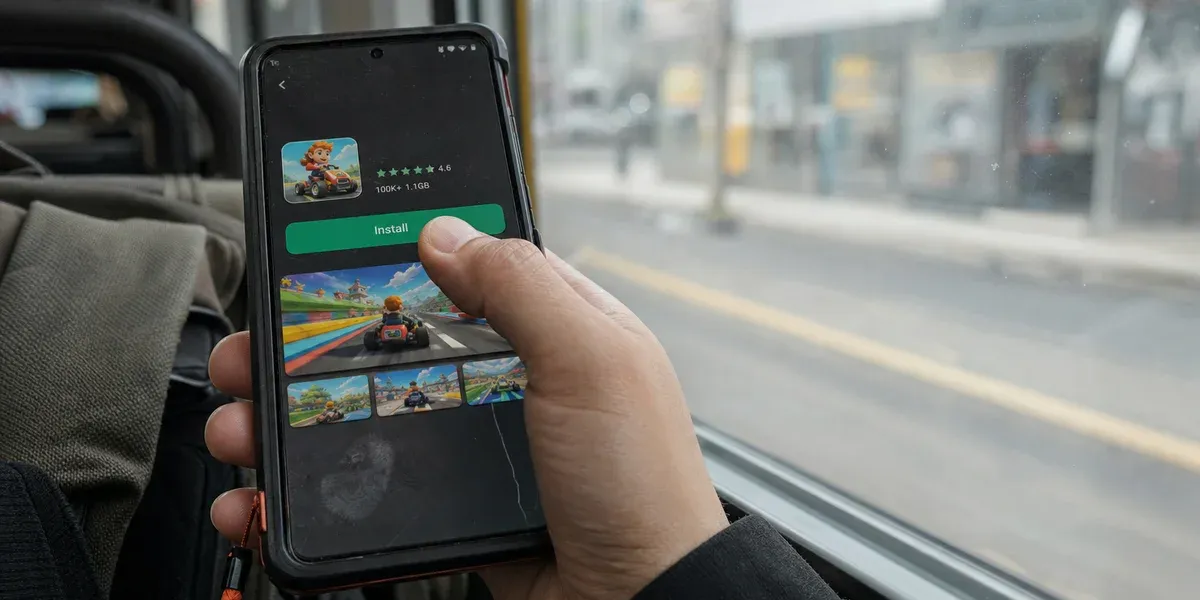
Direct answer — what does Google’s Registered App Stores program change for games distributed on third-party Android stores? From December 1, 2026, a third-party Android store that registers with Google can install apps in one tap, without the system confirmation screen, and update them in the background — but only on devices running Android 17 QPR2 or later, and only for users whose home country is on Google’s list, which does not include the United States. Registration is optional, costs the store $10,000 a year, and requires it to share its entire catalog with Google for malware scanning. For publishers, it removes the two frictions that hurt sideloaded stores most — the per-install prompt and manual updates — but the devices that benefit will be a small slice of the Android base at first, so it improves conversion on stores you already use rather than opening new reach overnight.
The program came out of the agreement under which Google said, in March 2026, it had resolved its disputes worldwide with Epic Games, alongside the Play fee changes we broke down in our Google Play fees and billing choice guide. The fee card got the headlines. Registered App Stores is the quieter change, and for studios that ship outside Play it is the more structural one: it gives stores that are not Play a sanctioned way to behave like Play on the device.
What exactly do registered stores get?
Google’s overview page lays out the difference against a standard sideloaded store in three lines:
| Registered App Store | Standard third-party store | |
|---|---|---|
| Install permission | Granted automatically once the store is verified | User must manually enable REQUEST_INSTALL_PACKAGES in System Settings |
| Installing an app | One-tap install, no extra confirmation screen | A confirmation dialog for every app |
| Updating an app | Background updates, with user control settings | Manual user approval for each update |
Anyone who has run a campaign driving players to a sideloaded store knows where those three lines bite. The settings detour is where first-time users abandon; the per-install dialog adds a step to every acquisition; and manual updates mean a live-ops game ends up with players stranded on old builds, which is a support cost and, for anything with a server version check, a churn event.
The program does not change anything for stores that stay out. Google’s March 4 announcement is explicit: “If a store chooses not to participate, nothing changes for them and they retain the same experience as any other sideloaded app on Android.” Nobody is being pushed off the device; registered stores are being pulled ahead.
Where and on which devices does it apply?
Two filters decide whether a given player sees the registered flow, and both narrow the early reach considerably.
The device filter. The FAQ states that “starting December 1, 2026, Registered App Store status is available on Android 17 QPR2 and higher devices”. QPR2 is a quarterly update to Android 17, not a new major version, so at launch the qualifying installed base is limited to devices that have already received it. OEMs ship Android updates on their own schedules, which means the mid-range and entry devices that many third-party stores rely on may be among the last to qualify. Model it as a curve over 2027, not a switch flipped on December 1.
The country filter. Availability follows “the end-user’s home account country”, not where the phone happens to be. The supported list is long — it includes Brazil, Mexico, India, Indonesia, Japan, South Korea, the United Kingdom, all EU member states, Nigeria, Kenya, Saudi Arabia and Turkey, among many others — but the United States is not on it. Google’s announcement says the program “will begin outside of the US first and we intend to bring it to the US as well, subject to court approval.”
Do not confuse this with Third-Party App Store on Play, the separate US-only Google Play programme under which rival stores are distributed through the Play Store itself. Google’s FAQ draws the line clearly: Registered App Stores provides “OS-level platform capabilities, such as one-tap installs”, while the other “governs third-party stores distributed specifically within the Play Store ecosystem, available in the US only.” Two programmes, two geographies, two different problems — one is about getting the store onto the phone, the other about how it behaves once it is there.
What does a store have to do to register?
This is where publishers should read closely, because the obligations Google puts on stores flow down to the studios listed in them. From the requirements page and the enrollment guide:
- A verified organisation. The store must be run from an Organization account in the Android Developer Console and hold verified status under Android developer verification. Individual accounts are not eligible.
- A $10,000 annual fee. The enrollment guide states that “active participation as a Registered App Store requires an annual registration fee of $10,000”, paid to start the eligibility review.
- Full catalog sharing. Stores must upload “all existing APKs currently published in your store” and every new APK or update afterwards to a Google-provisioned storage bucket “for ongoing malware scanning”. Every subsequent version of the store’s own APK must also be submitted for screening.
- Security thresholds with a price. “If more than 1% of install attempts or 2% of apps in the catalog over a 30 day period are found to be PHA, Google will assess variable fees required to screen and remediate high-risk catalogs.”
- Certification on a timeline. Stores must hold App Defense Alliance MASA certification at level AL2 from June 1, 2027, and display a data safety section built from the App Metadata Bundle from December 1, 2027.
- Open-marketplace rules. The store must operate as “an open third-party marketplace for all eligible developers with clear, non-discriminatory policies”, and if it allows advertising it must let developers integrate any ad network that complies with its trust and safety policies.
- Liability stays with the store. “App stores remain responsible and liable for their entire catalog. Google won’t moderate the content available within registered app stores.”
Two consequences for a studio. First, $10,000 a year plus certification and catalog-ingestion engineering is trivial for a large store and a real decision for a small regional one; expect the established names to register and the long tail to wait. Second, your builds in a registered store’s catalog will be passed to Google for scanning. That is the same malware screening logic Play already applies, but it is worth knowing before you ship a pre-release or region-exclusive build through a partner store.
Does lower friction change the reach math for alternative stores?
Partly, and in a specific place. The program helps stores that users have to download themselves — the sideloaded storefronts that today depend on a player clearing a settings screen and a security prompt. Storefronts that ship preinstalled as part of the device firmware, as most OEM stores do, generally do not go through that sideload flow in the first place, so the registered flow is less of a change for them. For the OEM layer, the compliance change that already happened is the more relevant one: our Android developer verification checklist covers what has applied since September 30, 2026 to installs from seven named stores, Google Play and six OEM stores, for users in Brazil, Indonesia, Singapore and Thailand.
For a sideloaded store, the gain shows up in three numbers you can already measure:
- Store install completion — the share of users who reach the store’s download page and end up with a working store. One-tap does not touch the first sideload of the store itself, so this number moves least.
- Game install conversion inside the store — removing the per-app confirmation dialog takes a step out of every install.
- Update adoption — background updates should shrink the tail of players on old builds, which is the metric that matters most for live-ops titles.
The honest read is that the program improves the economics of channels you have already decided to use. It does not turn a store with weak organic discovery into a strong one, and on day one it applies only to the subset of their users on qualifying devices in listed countries. If you are building the business case for a new channel, keep the unregistered flow as your base case and treat the registered flow as upside that grows through 2027. Our distribution team builds those channel models with studios, store by store and country by country.
There is one structural shift worth pricing in now. Once a few stores register and a few do not, players on the same phone will feel the difference, and the unregistered stores will look less trustworthy by comparison. Over time that is likely to concentrate sideloaded volume on the stores that pay to register — a smaller, more professional set of alternative storefronts, similar to the alternative app store landscape we describe for 2026.
What should a publisher ask its stores before December 1?
Add these questions to your next partner review with any third-party Android store you ship on or are evaluating:
- Are you registering, and when? Get a target date for “Registered” status, not an intention.
- Which of our markets does it cover? Cross your top countries against Google’s supported list. US players get no change for now.
- How will you handle update ownership? Google’s FAQ says that if a store is uninstalled, its apps “stop receiving automatic updates”, and a reinstall reclaims them only if no other store updated those apps in the interim. If your game is also on Play, know which store owns updates for which players.
- What happens to our builds in the catalog feed? Confirm what the store uploads to Google, and whether you need to align signing or release timing.
- What is your plan for MASA and the data safety section? A store that misses the June 1, 2027 or December 1, 2027 requirements risks removal from the program, which would put your players back on the manual flow.
- What changes in your ad and billing terms? Registration does not change who handles payments; your commercial terms with the store still decide your margin.
Then measure. Split install conversion and update adoption by Android version from December onwards, so that by mid-2027 you can see whether the registered flow is earning its keep in your own data.
FAQ
Is the Registered App Stores program mandatory for third-party Android stores?
No. Google’s FAQ states that participation “is entirely optional” and that third-party stores “may continue to operate on Android as they do today without enrolling”. Stores that stay out keep the standard sideloaded experience, with the install permission in System Settings and a confirmation for every install and update.
When does the Registered App Stores program start?
On December 1, 2026, on devices running Android 17 QPR2 or higher, for users whose home account country is in Google’s list of supported regions. The United States is not on that list; Google says it intends to bring the program to the US subject to court approval.
How much does it cost a store to register?
Google’s enrollment guide sets an annual registration fee of $10,000. Stores whose catalog crosses Google’s malware thresholds — more than 1% of install attempts or 2% of catalog apps found to be potentially harmful over a 30-day period — face additional variable fees.
Does a registered store use Google Play billing?
Nothing in Google’s Registered App Stores requirements requires a store to use Google Play billing. The obligations cover verification, security, catalog sharing and user experience; your payment terms remain whatever you agree with the store.
Is this the same as third-party stores being available inside Google Play?
No. Third-party App Store on Play is a separate, US-only Google Play programme for distributing rival stores through the Play Store. Registered App Stores is an Android platform capability that applies to stores installed outside Play, in the supported regions.
If you ship on third-party Android stores, or are deciding which ones are worth adding before the registered flow rolls out, talk to our distribution team. Early-stage studios can start with the Founding Developer Program.