Vivo V-Appstore: the OEM store studios skip in India and SEA
vivo self-reports 200 million monthly V-Appstore users. What the store actually offers a game publisher in India and Southeast Asia — and what its docs never mention.
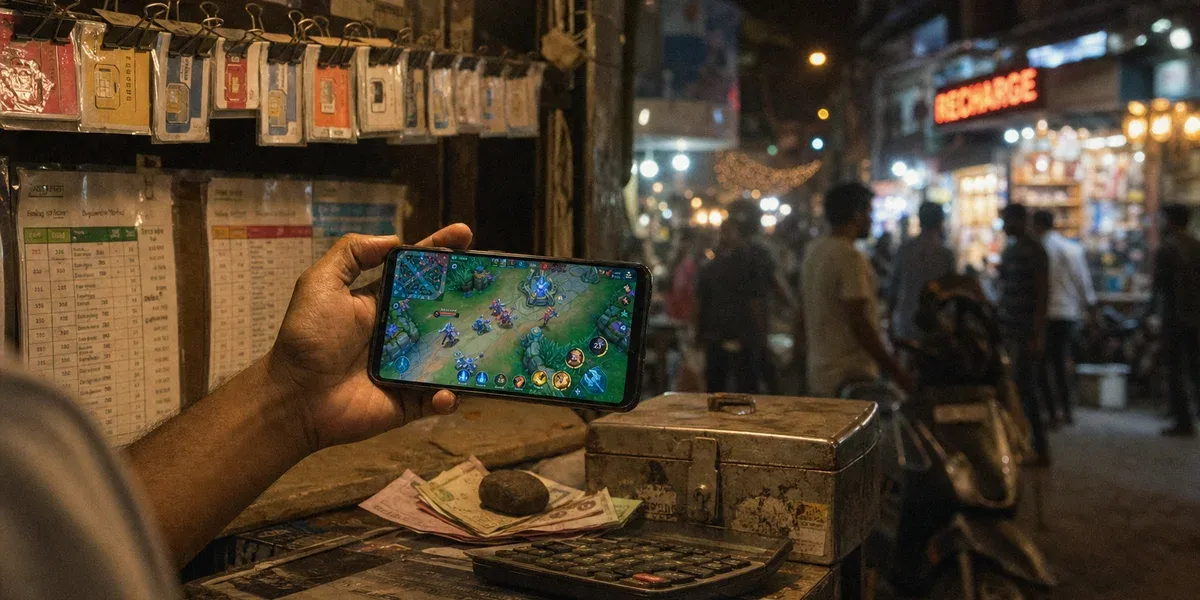
Direct answer — is vivo’s V-Appstore worth adding to a game’s distribution stack in India and Southeast Asia? Yes, if your title already has or wants players in India, Indonesia, Vietnam or the Philippines — and only after you accept two conditions. vivo self-reports 200 million monthly active users on the V-Appstore as of July 2026, but publishes no market-by-market split, so treat that as a platform claim rather than an addressable audience. And unlike Huawei’s AppGallery, vivo’s international handsets are Google-services devices, so V-Appstore distribution is additive to Google Play, not a substitute for it. For Vivo V-Appstore games distribution the real question is not reach, it’s whether you can prove the installs are incremental.
vivo is the fourth OEM store. Studios build a channel map that runs Samsung, Xiaomi, Huawei, and stops. That map is missing the vendor that leads India — the single largest Android market by units — and holds a mid-single-digit-to-low-teens position across Southeast Asia. This piece is for publishers deciding where the next integration goes: what vivo actually documents, what it conspicuously does not, and how the channel differs from the three OEM stores everyone starts with.
How big is the vivo channel, really?
Two different numbers answer that, and they measure different things.
What vivo says about its store. vivo’s global developer platform runs a “Distribution data dashboard” for the V-Appstore showing 280 million total users, 200 million monthly active users, 38.54 million daily active users and 42.04 million daily distributions, with a footnote stating the statistics are from July 2026. Read the scope carefully before you quote it: these are vivo’s own self-reported platform figures, published on a page whose purpose is developer acquisition. vivo publishes no methodology, and no split between the Chinese V-Appstore and the international one. It is vivo’s claim about V-Appstore worldwide — not an audience number for Indonesia.
The last time vivo broke out an international-only figure was January 2021, when it said users of the international V-Appstore had “exceeded 100 million registered accounts” with “5.8 billion cumulative online downloads”. Registered accounts are not active users, and that datapoint is now more than five years old. What it establishes is that the overseas store is a long-running operation rather than a recent bolt-on — vivo has simply not published an updated international breakout since.
What independent trackers say about the devices. Counterpoint Research put vivo first in the India smartphone market in Q1 2026 with a 21% share excluding iQOO — 23% in Counterpoint’s quarterly series, which counts iQOO as vivo. In Southeast Asia, Omdia has vivo fifth for full-year 2025, shipping 11.9 million of the region’s 100 million smartphones for a 12% share, down 6% year on year, with average selling price up 11%. In Indonesia specifically, Omdia puts vivo at 15% for full-year 2025, in fifth place.
Note precisely what those three figures are: shares of smartphone shipments, not app-store share, not games revenue, and not install share. They tell you how many vivo devices enter a market — the ceiling on the channel, not its yield. Anyone converting a handset-shipment share into a “gaming audience” is doing arithmetic the source does not support. Sizing that gap between device reach and channel yield is exactly the work our distribution practice does before a studio commits engineering time.
What does vivo publish for developers — and what is missing?
vivo’s global developer platform documents a five-step admission process: register account, enterprise verification, upload app, app review, publish and display. Step two matters more than it looks. Google Play lets a developer open a Play Console account for a US$25 one-time registration fee; vivo’s route starts with an enterprise verification gate. This is a company-level onboarding, not a self-serve signup, and it is the step that quietly adds weeks to a timeline if you leave it late.
The app-creation documentation is specific about the rest:
- Package ceiling. Uploads are capped at 3GB.
- Country and language targeting are explicit. You select the distribution country or region first, then the languages for that country. English is the base language, and you may supply English content only — useful for a first listing, but it leaves the localisation upside on the table in exactly the markets where the channel is worth having.
- Copyright proof, with a revealing fallback. Chinese enterprises must supply a software copyright certificate. Global developers can supply any copyright proof recognised under their own country’s law — and if they have none, vivo’s documentation accepts Google Play back-office screenshots as evidence of ownership. That fallback tells you who vivo thinks its overseas developers are: studios that already ship on Play.
- IARC age rating is required, across the 3+, 7+, 12+, 16+ and 18+ bands.
- HTML5 games have a documented route. Alongside standard game creation, the index carries an H5 Game Integration Guide, H5 Game Detail Page and SDK, H5 Game Tag Selection and an H5 Game Content Management Specification — a real web-native surface inside an OEM store, and an unusual one.
Now the absence, which is the more useful finding. vivo’s global developer documentation index covers accounts, app and game management, review guidelines, violations and appeals, an open API for submission, Android adaptation guides and the service agreement. For a standard app or game listing, it publishes no documentation for in-app purchases or billing and no featuring programme, and there is no rate card. That is consistent with how OEM store economics work generally — revenue share is negotiated per partner, not posted — so do not go looking for “the vivo rate”, and be suspicious of any third party that quotes you one. The one carve-out is the H5 lane: those games are ad-only, with IAP explicitly unsupported, and vivo documents a real advertising requirement there — a Google AdSense integration with specific Auto Ads placement rules (anchor and interstitial ad configuration). Even that isn’t a vivo rate card, though: the payout split is whatever your AdSense account is set to, not a number vivo publishes. The commercial terms for everything else are a conversation, and the conversation happens after you have a live listing worth talking about.
The Aurora Award, and the featuring gap
vivo does run a merit-based featuring programme called the Aurora Award (极光奖), and its rules are documented in detail — on dev.vivo.com.cn, vivo’s Chinese developer platform. Apps are judged on three dimensions: design and interaction quality, richness and quality of content, and practical usefulness with genuine feature innovation. Winners get a badge and a dedicated Aurora Award section in the store. The honour is valid for two years, after which it lapses and can be re-applied for. Submissions are collected weekly with a Monday 18:00 cut-off, and applicants are notified of the outcome within five working days.
That is a genuinely attractive structure — editorial placement earned on merit rather than bought — and it is the model studios hope for when they hear “OEM featuring”. The caveat is the scope: it is documented for vivo’s domestic Chinese store. We could not find an equivalent published programme for the international V-Appstore, and the global documentation index does not list one.
Treat that as the operational reality of this channel rather than a dead end. On the Chinese platform, featuring is a documented process with a submission form and a deadline. Internationally, it is a relationship — you get placement by having a listing that performs, a local build that works, and someone at vivo who returns your emails. That is the same shape as the OEM preload and placement conversation everywhere else, and it rewards the studios that show up with data.
Why this isn’t the Samsung, Xiaomi and Huawei playbook
Three differences worth planning around.
It is additive, not substitutive. Huawei’s AppGallery matters because, on post-2019 Huawei devices, Google Play is not there. vivo’s international handsets are Google-services devices — vivo’s own copyright-proof fallback assumes you already publish on Play. So V-Appstore is the second store on the phone, not the only one. Every install you get there is potentially an install Play would have given you anyway. Instrument for incrementality from day one, or you will be reporting cannibalised volume as growth. The head-to-head on Galaxy Store, GetApps and AppGallery sets out the same test for the big three.
The device base skews differently. vivo’s Southeast Asian ASP rose 11% in 2025 on Omdia’s numbers, in a year when its unit volumes fell 6% — a vendor trading down-market volume for mid-range value. That is a different player than the entry-tier, bandwidth-constrained audience behind Transsion’s Palmstore in Africa, where lightweight builds are the entry ticket. On vivo’s base you are closer to a normal mid-range Android target, with the same content expectations Play users have.
There is no reliable aggregator shortcut. The multi-OEM aggregator layer grew up around Samsung, Xiaomi and Huawei; vivo coverage is not something to assume. If you are already working with an aggregator such as KYLN, ask explicitly whether vivo is in scope before you plan around it. Otherwise this is a direct integration.
What should a studio do next?
- Qualify by market, not by curiosity. Only pursue vivo if India, Indonesia, Vietnam or the Philippines are already meaningful or strategically targeted. Our Southeast Asia distribution playbook covers how the per-country OEM and carrier-billing picture fits together.
- Start enterprise verification early. It gates everything downstream and is not a same-week task.
- Ship a self-serve listing first. Get the build live, English-only if you must, with the right distribution countries and IARC rating selected. Prove the title installs and runs cleanly on vivo hardware before asking anyone for placement.
- Then localise, then ask. Add per-country language content, gather two or three months of retention and revenue data, and only then open the featuring and commercial conversation.
- Measure incremental paying players. Not installs. If V-Appstore installs simply move volume off Play, the channel has cost you engineering time and returned nothing.
When not to proceed: if your revenue is concentrated in the US, EU or Japan, if your build cannot pass a 3GB ceiling, or if you have no capacity to run a second store’s compliance and update cycle, this is a distraction. vivo is a high-fit channel for a specific geography, not a default box to tick.
FAQ
What is vivo’s V-Appstore and how big is it?
V-Appstore is vivo’s own Android app store, preinstalled on vivo handsets. vivo’s global developer platform publishes a distribution dashboard claiming 280 million total users, 200 million monthly active users and 38.54 million daily active users, with a footnote saying the statistics are from July 2026. Those are self-reported platform figures with no published methodology and no split between the Chinese and international stores, so they should not be read as an addressable audience for any single market.
Which markets make vivo distribution worth the integration effort?
India first: Counterpoint Research put vivo top of the India smartphone market in Q1 2026 with 21% of shipments excluding iQOO. Then Southeast Asia, where Omdia has vivo fifth for full-year 2025 with 11.9 million units and a 12% share, including 15% in Indonesia. These are smartphone shipment shares, not app-store or games-revenue shares — they indicate device reach, which is the ceiling on the channel rather than its return.
What does it cost to publish a game on the V-Appstore?
vivo does not publish one for a standard app or game listing. Its global developer documentation covers registration, app and game creation, review guidelines and API submission, but includes no in-app purchase or billing documentation, no featuring programme and no revenue-share rate card for that route. OEM store commercial terms are generally negotiated per partner rather than posted, so treat any single headline “vivo rate” quoted by a third party as unverified. The one exception is H5 games, which are ad-only — IAP is explicitly unsupported — and monetize through a documented Google AdSense integration rather than a vivo-set percentage. The published cost of entry is process, not money: enterprise verification, copyright proof, IARC rating and a package under 3GB.
vivo is the OEM channel that leads the largest Android market on earth and still gets left off most distribution maps. Working out whether it is incremental for your titles — and getting from a self-serve listing to a placement conversation that goes somewhere — is exactly the channel work our Founding Developer Program is built for. The devices are already shipping. The question is whether your game is on the store that ships with them.
Sources
- vivo Developers
- App Creation
- 极光奖申请流程和规范 (Aurora Award application process and rules)
- vivo Announces Comprehensive Developer Platform Upgrades at VDC 2020
- India Smartphone Market Share: Quarterly
- Samsung beats Transsion to regain Southeast Asia smartphone leadership in 2025
- Indonesia Smartphone Market Share 2025: Xiaomi, Transsion, Samsung, OPPO and vivo Battle in Value-First Era Amid Pricing Pressures
- Get started with Play Console